
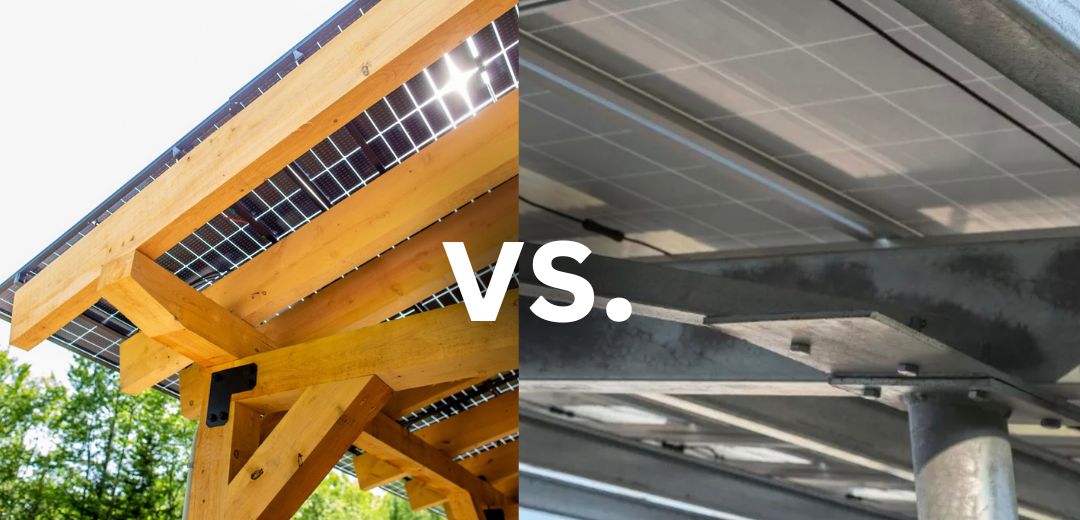
Steel has long reigned as the go-to structural foundation for solar. However, the dawn of the multi-use solar era—in which solar is expected to be versatile and beautiful as well as productive—has given rise to wood as a building material.
There’s no denying that steel’s strength and durability helped make the solar revolution possible. However, steel comes with extremely concerning climate costs; its manufacturing alone accounts for 7-11% of all global carbon emissions. In a sense, using steel to reduce carbon emissions is a bit like bailing water with a pasta strainer.
Wood has a variety of advantages over steel as a solar building material—beauty, local availability—but can we quantify their relative environmental impacts?
The true carbon cost of steel
The carbon emitted while manufacturing steel weighs over twice as much as the steel itself — for every tonne of steel manufactured, 2.2 tonnes of carbon dioxide are released into the atmosphere.
This is especially concerning given the fact that humans manufactured nearly 2 billion tonnes of steel in 2024 alone. Because it is mostly manufactured in China, it must also be shipped across the Pacific Ocean and then trucked across the continent.
This means that a small, 1.4-tonne steel solar carport structure has already belched over four tonnes of CO2 into the atmosphere by the time it’s assembled—roughly the weight of two F-150 pickup trucks.
How does wood compare?
Wood, by contrast, is essentially frozen carbon. Carbon accounts for about half of its mass, meaning a 3,500-kg timber solar carport frame has already sequestered about 1,750 kg of carbon—or ~4,700 kg of CO2—from the atmosphere.
Subtracting various emissions from harvesting, trucking, and steel hardware, we’re left with over four tonnes of CO2 sucked out of the atmosphere before the solar carport even starts producing electricity.
When we use wood instead of letting it decompose, we “freeze” that carbon in place so that it can serve us while staying out of the atmosphere for decades or centuries.
But wait, there’s more
The environmental benefits of a wood solar carport go beyond carbon. Assuming sustainable forestry practices and no clear-cutting, harvesting timbers offers a host of secondary benefits:
- Selectively thinning mature trees helps saplings grow.
Exposure to sunlight is everything when you’re a tree. Older, larger trees have expansive canopies that block sunlight from reaching smaller trees below. Sustainable forestry involves selecting for those trees whose growth has plateaued and harvesting them, which clears room for the smaller ones to thrive.
- Cutting mature trees can “game” carbon sequestration.
Research shows that a tree’s carbon capture peaks at a certain age. By harvesting trees near peak maturity, we can optimize the amount of carbon a forest is sequestering over its lifetime.
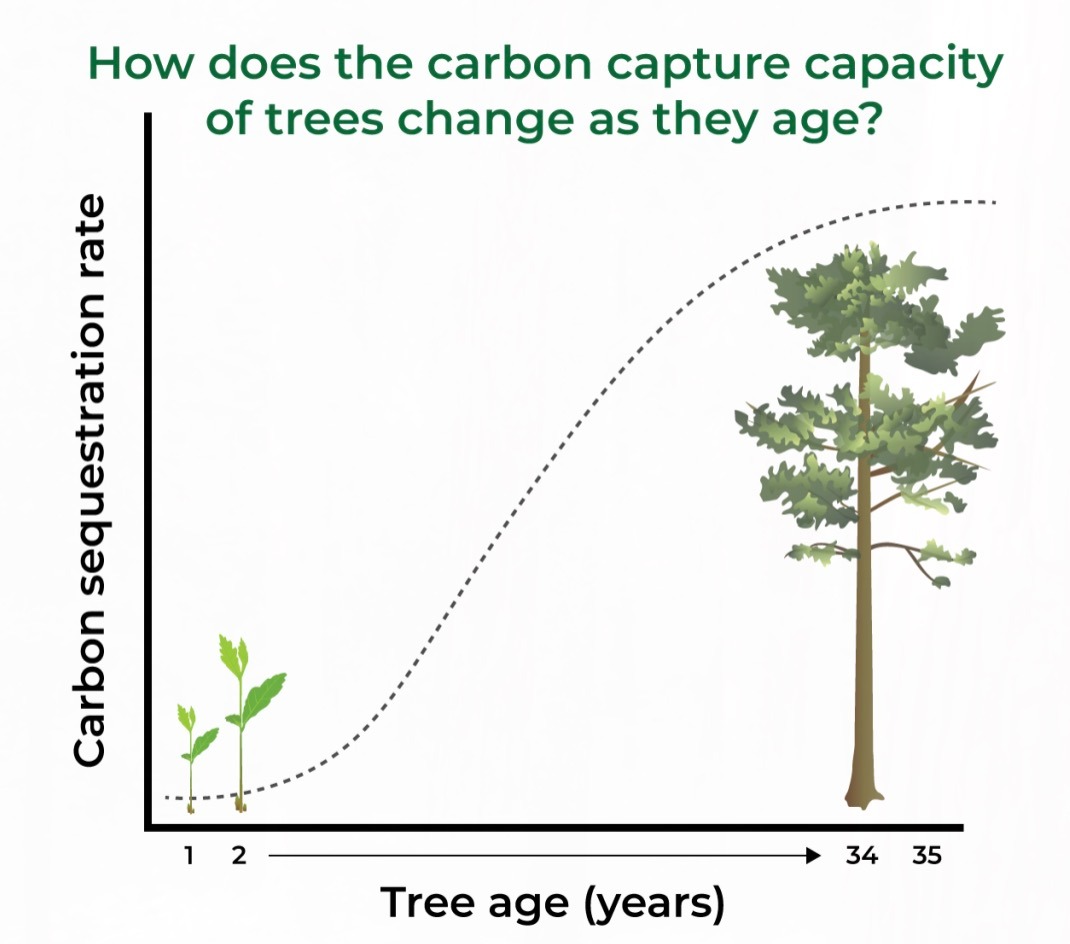
Source: Carbon Neutral
- Sustainable timber harvesting can protect forests from development.
Landowners often face ongoing property taxes, rising costs, or financial pressure to sell their land. When a forest generates no income, developers can offer a tempting, and sometimes necessary, financial exit.
Sustainable timber harvesting gives land recurring cash flow, making the forest worth keeping. In Vermont, where reforestation has helped the state recover from 30% to 78% forest cover in about a century, this exerst an important protective force.
- Regional trees = less shipping
Cargo ships release more carbon into the atmosphere each year. Choosing local timbers instead of international steel usually means ≤100 miles in a truck instead of thousands of miles on a cargo ship plus trucking.
Timber solar carports are part of the solution from T=0
From the moment you embrace the marriage of wood and solar, your residential solar carport is already helping the planet at a time when it badly needs it.
Solar carport cost analysis rarely accounts for initial carbon budgeting. For solar customers who are concerned about reducing carbon emissions, wood offers yet another possibility to get more for less.